Mr. Appliance® explains the key reasons why DIY repair is difficult for smart fridges:
|
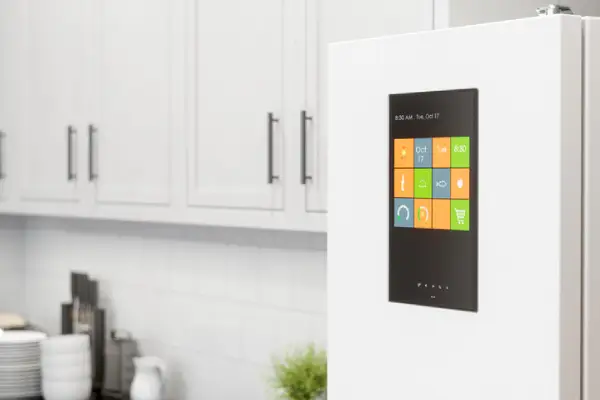
Wi-Fi-enabled smart fridges offer a great deal of convenience in our daily lives, but when something goes wrong, they present a unique challenge. While handy homeowners can typically handle DIY maintenance such as cleaning the coils and replacing water filters, smart fridges contain more than mechanical components.
Smart fridges integrate standard refrigerator components and cutting-edge digital technology, making smart refrigerator repair a chore best left to qualified professionals. In this article, we’ll explore the limitations of DIY fixes and when to call an expert for smart refrigerator repairs.
Article contents
- The “Wrench Fallacy”
- The Service Mode Trap
- The Firmware Nightmare
- The Warranty Warning
- The Professional Difference
- The High Stakes of High Voltage Refrigerator Service
- Need Professional Smart Refrigerator Repair? Call Mr. Appliance
- FAQs About DIY Refrigerator Repair
The “Wrench Fallacy”
The biggest trap for the modern DIYer is the “Wrench Fallacy”—the belief that every symptom has a physical source that you can see, touch, and tighten.
In analog refrigerators, a failure to cool is likely due to a broken fan or a dusty coil. However, in a smart fridge, that same symptom is often a digital decision made by a motherboard.
Case study: The variable speed compressor
In standard fridges, the compressor is either ON (100% power) or OFF (0% power). It can be tested with a simple multimeter: If it has power but isn’t running, it’s probably broken.
However, smart fridges use linear inverter compressors that can run at 1050 RPM, 2300 RPM, or anywhere in between, depending on data from multiple sensors. If the refrigerator isn't cooling, the compressor might be mechanically perfect; the issue could be a thermistor (temperature sensor) reporting a false reading, causing the computer to tell the compressor to slow down.
The “wrench fallacy” says to replace the compressor—a several-hundred-dollar job—only to find the fridge still warm. You fixed the hardware, but the software is still giving the wrong orders. When approaching smart refrigerator repairs, it’s critical to understand that many issues cannot be resolved by simply replacing the most obvious part.
The Service Mode Trap
Many smart refrigerators feature a service mode or “forced defrost” (Fd) mode used by service professionals to test the heating element during refrigerator service. It forces the heater on, regardless of the temperature sensors.
Service modes often bypass safety protocols. A service professional knows to monitor the amperage and exit the mode immediately after testing, but a DIYer can cause accidental damage to the appliance by misusing the function.
If you leave a fridge in “Fd” mode too long because you don't know the specific button combination to exit (which varies by model year), you can melt the plastic liner of your refrigerator or overheat the evaporator coil.
You might trigger “hidden” codes
Without knowing exactly what you’re doing when accessing service mode, you could accidentally activate a mode that shuts off the fans to simulate a showroom setting (often called demo mode). Locking a refrigerator in demo mode during DIY refrigerator repairs may require professional assistance to restore functionality.
The Firmware Nightmare
We’re all used to our phones and laptops needing updates, but we rarely think about the operating system (OS) running our kitchen.
Smart fridges with touchscreens, like the Samsung Family Hub or LG InstaView, are essentially tablets hardwired into the door. They require firmware updates to patch security vulnerabilities and improve efficiency.
Bricking a pricy appliance
Many smart refrigerator connectivity issues lead to homeowners attempting a hard reset by unplugging the appliance. If the unit is in the middle of a background firmware download, this can shut down the touchscreen that controls the fridge.
In the computer world, this is called “bricking”: The machine is now as functional as a brick. When you plug it back in, the screen remains black. The compressor might not even activate because the brain controlling it is dead.
Suddenly, a connectivity annoyance has become a catastrophic failure. Unlike a laptop, you cannot simply boot from a USB drive to reinstall the OS. Smart fridge boards often require proprietary software to re-flash, or worse, a complete replacement of the user interface (UI) board—a part that can cost several hundred dollars.
The Warranty Warning
This is perhaps the most practical reason to put down the tools. Smart fridges come with extensive, specific warranties. Your unit might have a 1-year warranty on the electronics, but a 5-year or 10-year warranty on the “sealed system” (compressor and coils).
In many cases, unauthorized repair attempts can void these valuable warranties.
If you unscrew the back panel of your smart fridge and break a tamper seal, or if a service professional arrives and sees non-OEM wiring attempts, the manufacturer may deny your warranty claim. If any aspect of your smart fridge is under warranty, there is no need to throw away hundreds of dollars in parts and labor coverage just to save the cost of a service call.
The Professional Difference
When a refrigerator service professional repairs a smart fridge, they’ll often reach for a diagnostic tool before a screwdriver.
GE, Whirlpool, and other manufacturers use proprietary diagnostic systems (like the SmartHQ module) to troubleshoot their smart appliances. These devices allow refrigerator repair experts to see things a multimeter cannot, such as:
- Sensor history: Temperature spikes suggest a defrost timer issue rather than a compressor failure.
- Fan RPM feedback: A fan that’s receiving voltage but failing to spin at the target speed may indicate a motor issue, while a board that isn’t sending voltage at all suggests a problem with the control board.
- Cycle counts: Determining exactly how many times the ice maker has cycled helps determine whether the issue is a defect or the result of typical wear-and-tear.
This is the difference between guessing and diagnosing. A DIYer buys a part hoping it provides the solution; a professional uses data to confirm the solution before a single screw is turned, minimizing time, money, and labor.
The High Stakes of High Voltage Refrigerator Service
There is a physical safety element here that cannot be ignored. Modern inverters and control boards handle electricity differently than old-school mechanical switches.
Many modern control boards use electrolytic capacitors. These components store electrical energy like a battery. Even if you unplug the refrigerator, these capacitors can hold a lethal charge for minutes or even hours.
If you touch the wrong contact point on a control board while trying to "test" it, you aren't just risking a shock; you are risking frying the low-voltage logic chips on the board.
Flammable refrigerant poses a risk around electricity
Additionally, many modern units use R600a refrigerant (Isobutane). Unlike the old Freon, R600a is flammable. Piercing a sealed system line during a clumsy repair attempt can lead to a fire hazard. Handling these refrigerants requires EPA certification and specialized equipment—legally and practically, this is not a DIY job.
Need Professional Smart Refrigerator Repair? Call Mr. Appliance
Your smart refrigerator is a marvel of modern engineering. It saves energy, keeps food fresher longer, and offers conveniences your parents never dreamed of. But complexity comes at a cost.
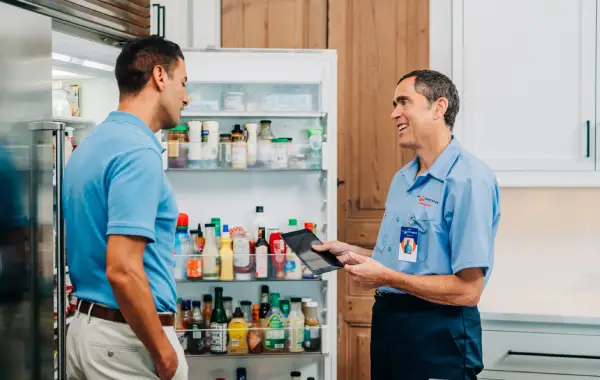
When your digital appliance throws a digital fit, don't reach for the toolbox. Reach for the phone and contact a qualified, trusted repair professional to save your weekend, your warranty, and your wallet. Our service professionals provide upfront estimates and back all work with the Neighborly Done Right Promise® to ensure your satisfaction. Contact your local Mr. Appliance team to schedule service for smart refrigerator repair.
This article is intended for general informational purposes only and may not be applicable to every situation. You are responsible for determining the proper course of action for your home and property. Mr. Appliance is not responsible for any damages that occur as a result of this blog content or your actions. For the most accurate guidance, contact the Mr. Appliance location nearest you for a comprehensive, on-site assessment.
FAQs About DIY Refrigerator Repair
Decades of experience, highly skilled service professionals, and a commitment to exceptional customer service have made Mr. Appliance a trusted leader in appliance maintenance and repairs. Our commitment to keeping your appliances up and running includes using our many years of experience and expertise to answer your questions. Here are answers to some of the most frequently asked questions about refrigerator service.