Mr. Appliance® compares front-load and top-load washing machines, highlighting key differences to help consumers choose the best option.
|
Wondering whether a front or top-load washer is right for your home? Top-loader machines offer simple features, low-cost repair and maintenance, and the ability to add clothes mid-cycle. Front-load machines feature more efficient water and energy usage, with a gentler and more thorough cleaning process.
In this buyer’s guide, our experts compare top-load vs. front-load washers in detail so you can confidently choose the best option for your household’s needs, budget, and lifestyle.
Article contents
- What’s the Difference Between a Top-Load and a Front-Load Washer?
- Your Guide to Top-Load Washers
- Your Guide to Front-Load Washers
- Which Washer Type Is Best for You?
- Schedule Washing Machine Repair from Mr. Appliance
- FAQs About Top-Loader vs. Front-Loader Washers
What’s the Difference Between a Top-Load and a Front-Load Washer?
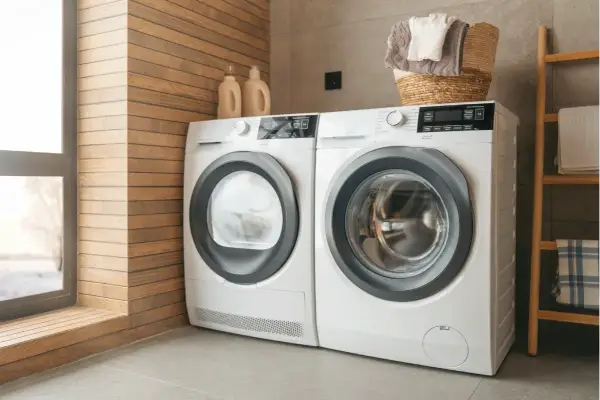
Top-loaders typically have larger capacities, shorter cycles, and are easier to load (meaning, you don’t have to bend over to do it). They use a central agitator or impeller that spins clothes during the wash cycle.
Front-load washers, on the other hand, use a tumbling motion that gently lifts and drops clothes through shallow water. This design uses less water and energy while cleaning your laundry very well. Many front-loaders are also stackable, making them perfect for smaller laundry rooms or apartments.
Both types have changed over the years. Many models now include smart technology, quiet operation, and self-cleaning features.
Your Guide to Top-Load Washers
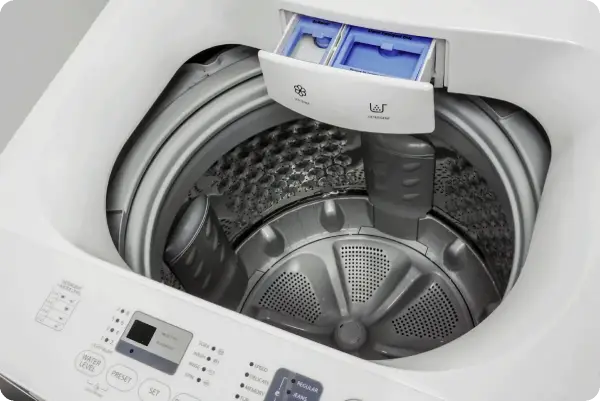
A top-load washer features a wide, drum-style opening at the top and a hinged lid that allows you to easily add clothes mid-cycle. Inside, a tall agitator or a flat impeller plate at the bottom circulates laundry during the wash cycle.
Top-load washers are known for their reliability and ease of maintenance. They’re also convenient for anyone who prefers standing upright while loading or unloading laundry.
There are two top-load designs:
- Agitator washers use a spindle that moves clothes quickly through the water.
- Impeller washers rely on a gentler motion, using the drum’s movement to clean fabric.
Pros and cons of top-load washers
Before you invest in a new washing machine, learn about the advantages and tradeoffs of top-load washers.
Pros:
- Price: Often more affordable than front-load models.
- Simple operation: Easy to use and quick to start.
- Easy to maintain: Fewer mold issues and less gasket cleaning.
- Shorter wash cycles: Some models finish loads faster.
- Less expensive repairs: Internal parts are easier to reach, which means easier repairs.
Cons:
- Uses more water and energy: Less efficient than front-load models.
- Harsher on fabrics: Agitators can be tough on delicate clothing—especially over time.
- Bulky design: Takes up more vertical space.
- Difficult to reach inside: Shorter users may struggle to grab clothes at the bottom.
Your Guide to Front-Load Washers
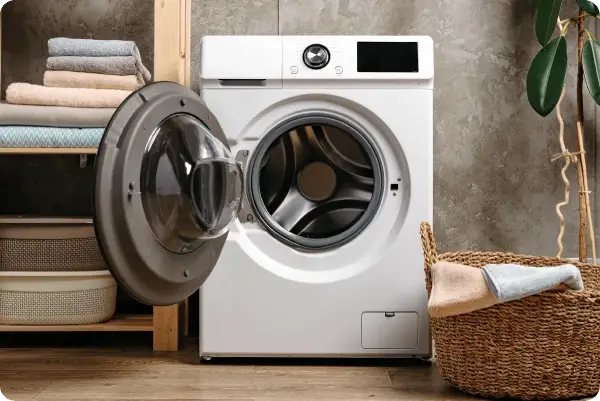
A front-load washer opens from the front and cleans clothes with a tumbling motion instead of agitation. The design is highly efficient—using less water while cleaning more thoroughly—and typically gentler on delicate fabrics than top-load washers.
Because these washers spin faster than top-loaders, they remove more moisture from clothes, meaning less drying time. They’re often stackable with dryers, which makes them a great choice for smaller laundry rooms, condos, and apartments.
However, because the door forms a watertight seal, trapped moisture can cause mold buildup if not cleaned and aired out regularly.
Pros and cons of front-load washers
Pros:
- Highly efficient: Use up to 45% less energy and 50% less water than top-loaders.
- Gentle on clothes: Tumbling motion reduces wear on fabrics.
- Faster drying time: High spin speeds extract more water.
- Space-saving: Stackable options fit well in small laundry spaces.
- Modern features: Smart sensors, steam cycles, and sanitation settings are common.
Cons:
- Higher upfront cost: Usually more expensive to purchase.
- Requires bending: Loading and unloading can be harder for some users.
- Mold concerns: The gasket must be kept dry between cycles.
- Costlier repairs: More complex internal components can raise repair costs.
Which Washer Type Is Best for You?
Choosing between top-load vs front-load washers depends on your space, laundry habits, and budget.
|
Choose a top-loader if: |
Choose a front-loader if: |
|
You want a lower-cost machine with quick cycles. |
You want maximum efficiency and gentler cleaning. |
|
You often wash bulky items like comforters or towels. |
You don’t have a lot of space for your laundry room and need a stackable option. |
|
You prefer easier access without bending over to load your clothes. |
You want faster drying times and lower utility costs. |
Additional considerations:
- Water efficiency: Front-loaders typically use 10–15 gallons per load; top-loaders use 20–25.
- Maintenance: Top-loaders need occasional drum cleaning; front-loaders need regular gasket care.
- Accessibility: Pedestals can make front-loaders easier to use.
- Longevity: Top-loaders often last longer due to simpler mechanics.
Whether it’s performance, simplicity, or efficiency that you are seeking, both washer types come with smart options designed to balance convenience and care.
Choosing the right washer
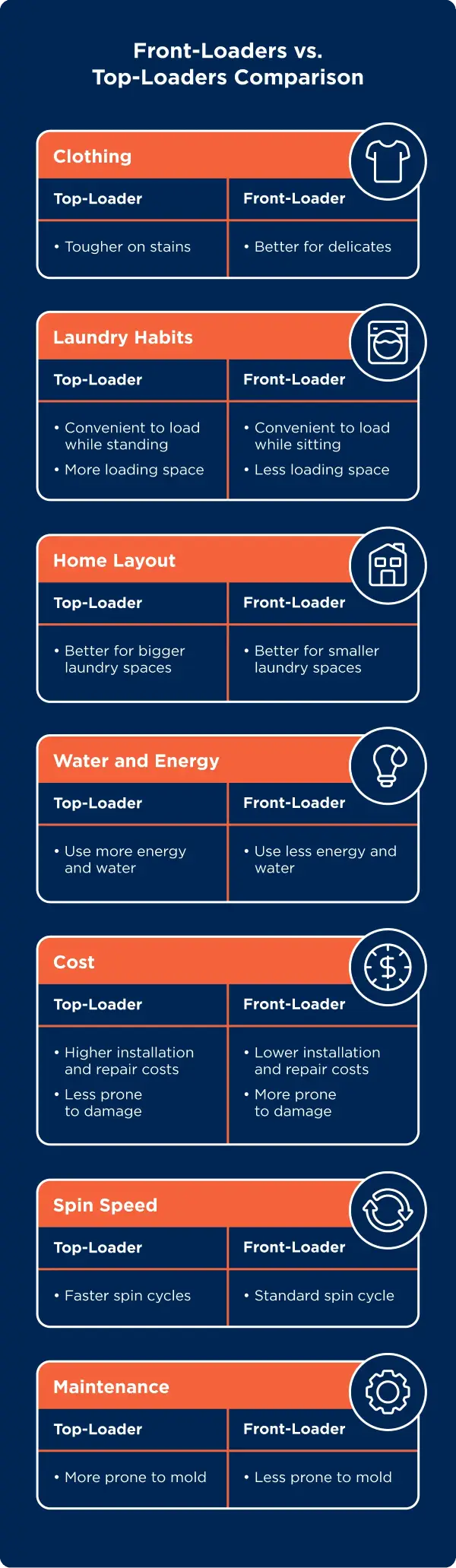
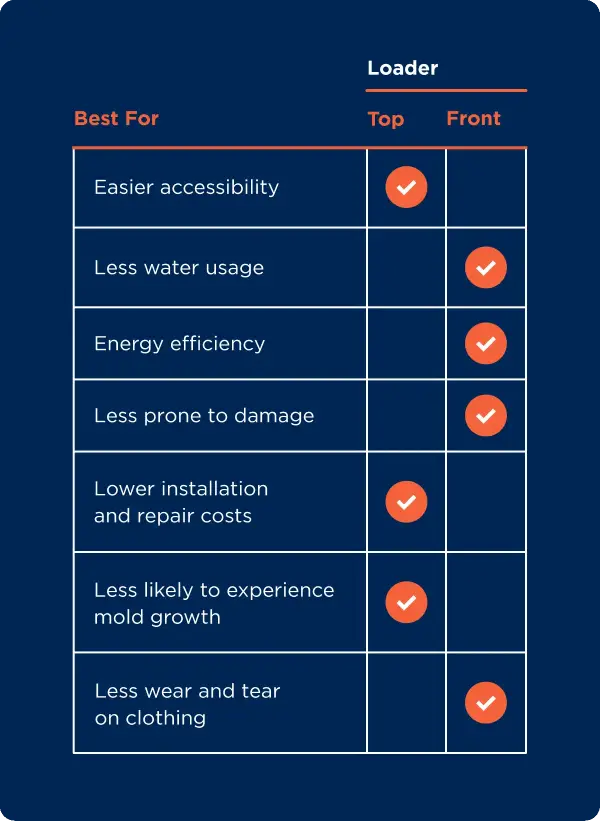
When deciding between front- and top-load washers, use this handy comparison chart to look for the features you value most:
Additional considerations include:
- Household laundry habits: Frequent loads of delicates may favor front-loaders.
- Space constraints: Stackable front-loaders work best for smaller laundry rooms.
- Availability for cleaning and maintenance: Top-loaders require less cleaning upkeep.
- Upfront cost vs. long-term savings: Front-loaders may cost more upfront but can reduce utility bills over time.
- Comfort and accessibility: If bending is difficult, top-loaders are the more ergonomic choice.
Schedule Washing Machine Repair from Mr. Appliance
Not ready to buy a new washer yet? A local Mr. Appliance service professional can diagnose and repair your washing machine, saving you the hassle and expense of replacement. Our experts service both top-loading and front-loading washing machines with courtesy and professionalism.
Your local Mr. Appliance team provides professional washer repair, tune-ups, or part replacements, all with upfront pricing and a commitment to your satisfaction. Request an appointment today!
This article is intended for general informational purposes only and may not be applicable to every situation. You are responsible for determining the proper course of action for your home and property. Mr. Appliance is not responsible for any damages that occur as a result of this blog content or your actions. For the most accurate guidance, contact the Mr. Appliance location nearest you for a comprehensive, on-site assessment.
FAQs About Top-Loader vs. Front-Loader Washers
All independently owned and operated Mr. Appliance locations are committed to providing the top-notch service you expect from an industry leader, including using our expertise and years of experience to answer your questions. Here are answers to some of the most frequently asked questions about top-load vs. front-load washing machines.