Mr. Appliance® experts explain common causes and solutions for washing machine leaks.
|
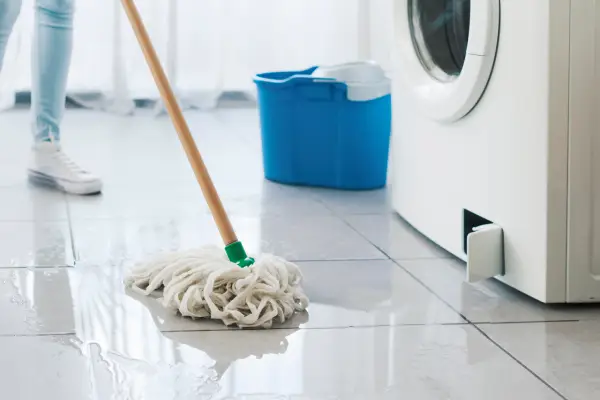
A laundry room floor covered in standing water is a headache—not to mention a slip-and-fall hazard. A leaking washing machine can be caused by overloading the washer, damage to the fill hose, using the wrong (or too much) detergent, and other factors.
Recognizing the most common causes and learning how to spot the source of a washer leak can help you mitigate the issue as quickly as possible to avoid significant water damage.
In this guide, we’ll explore how to troubleshoot a leaking washer, which issues can be resolved with DIY fixes, and when to call in a washing machine repair professional.
Article contents:
- 12 Common Causes of a Washing Machine Leaking
- How to Identify Washing Machine Leaks
- Trust Mr. Appliance for Washing Machine Repair
- FAQs About Fixing a Leaking Washing Machine
12 Common Causes of a Washing Machine Leaking
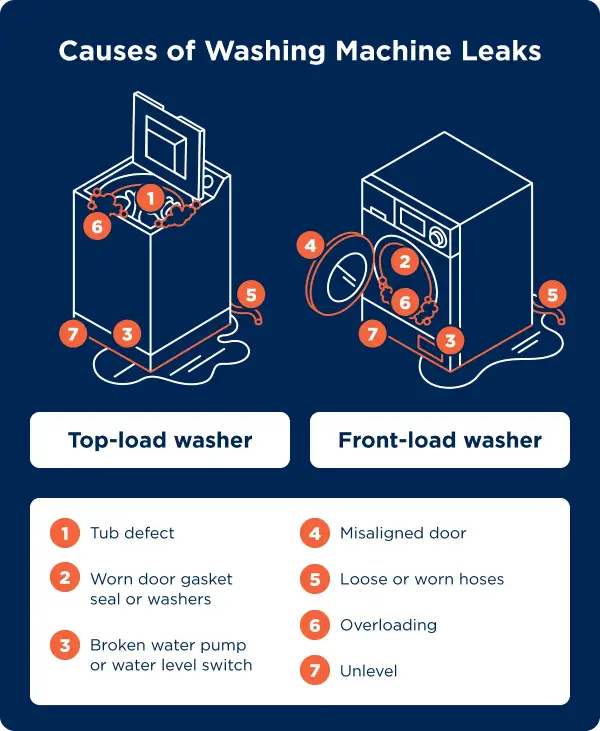
Below are the most common causes of a washing machine leaking, plus the best steps for a quick resolution.
1. Clogged overflow tube
Using too much detergent (or the wrong kind) can create excess suds that back up into the overflow system and cause leaks. This is especially common in high-efficiency (HE) washers when non-HE detergent is used.
To test your detergent level, place a small, freshly washed item in a bowl of clean water. If the water gets soapy, you’re using too much detergent. Using less detergent in each load can reduce suds and stop the leak without costing you a dime.
2. Overloaded washer
When a washer is packed with too much laundry, water can slosh where it shouldn’t, or the drum can go off balance, forcing water past seals.
The solution is to wash smaller loads, following the fill recommendations in your owner’s manual. Overloading doesn’t just cause leaking—it also causes shaking and can wear out the machine faster.
3. Unlevel washing machine
A washer that isn’t level can vibrate and shift during the spin cycle. That movement can loosen connections or cause water to escape from the front.
Unplug the washer, then adjust the leveling feet until the machine sits flat. Use a carpenter’s bubble level to check the top of the machine, front-to-back and side-to-side. Recheck the level every few months, as floors can shift.
4. Disconnected or loose drain hose
If water is leaking from the back of the washer during the drain cycle, the drain hose might be loose or not seated correctly in the standpipe.
Look behind the washer and confirm that the drain hose is firmly connected to the washer and properly inserted into the drain pipe. Tighten the clamp if needed. If the hose is cracked or brittle, replace it.
5. Clogged drain pipe
If the hose is secure but water still backs up at the drain, the problem could be the home’s drain pipe—not the washer. Lint buildup and debris can slow or block drainage, making the washer seem to be leaking.
Try clearing the drain using a drain cleaner or a small auger. If the clog is stubborn or keeps returning, a service professional can clear the pipe using more powerful tools.
6. Disconnected or damaged fill hose
If you see water during the fill portion of the cycle, or anytime the washer is not in use, check the hot and cold fill hoses. Over time, these rubber hoses can loosen, crack, or burst.
Inspect both hoses from the faucet to the washer. Tighten connections at both ends. If you see bulging, cracking, or corrosion, replace the hoses. Stainless steel braided hoses are a good upgrade for long-term reliability.
7. Worn rubber washers
Each fill hose has small rubber washers at the connection points. When those wear out, water can drip slowly down the back of the washer and onto the floor.
Turn off the water, remove the hoses, and replace the rubber washers inside the fittings. Reattach the hoses and turn the water back on. Check for leaks. If you’re unsure which rubber washer is bad, replace them both or contact a service professional.
8. Water pump leak
The water pump moves used water out of the tub. If the pump is cracked or worn, or its clamp is loose, water can escape from the bottom of the machine.
If you can see water dripping from the pump area, the pump should be replaced. Handy homeowners may be able to replace the water pump, but professional assistance is recommended to avoid damaging the tub or hoses.
9. Tub defect
Your washer actually has two tubs—an inner tub with holes and an outer tub that holds water. If the outer tub is cracked or defective, water will leak during the fill or wash cycles.
A tub defect isn’t a quick DIY task, as it usually requires disassembling the machine. Contact a qualified washing machine repair professional to inspect and replace the damaged part.
10. Malfunctioning water level switch
If the water level switch fails, the washer can overfill and leak from almost anywhere. You may notice water coming out of the drawer, door, or bottom.
Because this component controls how much water enters the machine, it’s best replaced by a service professional who can safely test the switch and install a new one.
11. Broken door gasket seal (front-load washers)
Front-load washers use a large rubber gasket to create a watertight seal. Detergent buildup, mold, or wear can prevent the door from sealing—and that’s a great way to get water everywhere.
Clean the gasket with a mildew cleaner or vinegar to remove residue. Use HE detergent (and less of it) to prevent buildup. If the gasket is torn or permanently deformed, it should be replaced by a professional.
12. Misaligned door (front-load washers)
If the door isn’t closing properly, water can escape even if the gasket is in good shape. This can happen if the hinges get loose over time.
Check the door alignment and tighten the hinges. If the door still doesn’t close flush, schedule service to have it adjusted or replaced.
How to Identify Washing Machine Leaks
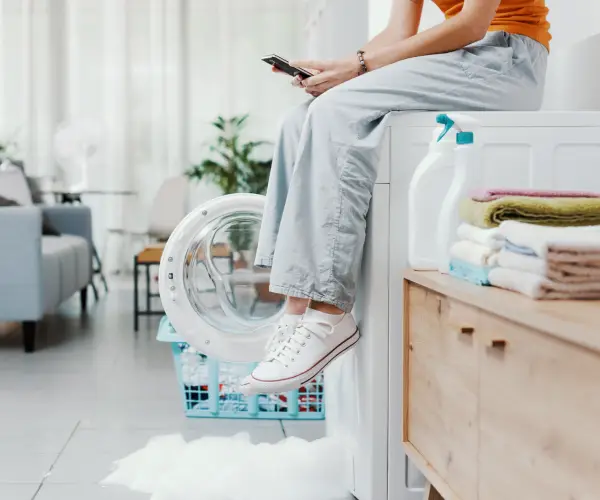
Before you start taking things apart, make sure the water you see is really from the washer. Sometimes it’s just a spill, a nearby sink overflowing, or a floor drain backing up. Look for:
- Water pooling around the base of the washer
- Damp or soft flooring near the appliance
- A musty or mildew smell in the laundry area
- Water trails behind or under the machine
To confirm a leak, wipe the water up, dry the area, and run a normal wash cycle. If another puddle appears, your washer is indeed leaking. Start by troubleshooting the issue or call a qualified appliance repair professional to resolve the problem as quickly as possible.
Safety first
Anytime you’re troubleshooting a leaking washing machine, start by unplugging the washer and turning off the hot and cold water supply. Place buckets underneath any hose attachments before removing them, and let the hoses drain fully before moving the machine. These precautions protect you from electrical shock and help avoid more water spilling onto the floor while you’re doing your detective work.

Trust Mr. Appliance for Washing Machine Repair
Some leaks are simple—like a loose hose or too much detergent causing an overflow. Others point to internal issues with pumps, tubs, or seals. If your washing machine's leaking problem keeps returning, or you notice water inside the machine even when it’s off, it’s time to call a professional.
Mr. Appliance service professionals can identify the exact source of the leak, replace worn parts, and help prevent future water damage. Our uniformed experts provide top-quality repairs with prompt service, upfront pricing, and respect for your home. Request an appointment with your local Mr. Appliance team today!
This article is intended for general informational purposes only and may not be applicable to every situation. You are responsible for determining the proper course of action for your home and property. Mr. Appliance is not responsible for any damages that occur as a result of this blog content or your actions. For the most accurate guidance, contact the Mr. Appliance location nearest you for a comprehensive, on-site assessment.
FAQs About Fixing a Leaking Washing Machine
Decades of experience, highly skilled service professionals, and a commitment to exceptional customer service have made Mr. Appliance a trusted leader in appliance maintenance and repairs. Our commitment to keeping your appliances up and running includes using our many years of experience and expertise to answer your questions. Here are answers to some of the most frequently asked questions about how to fix a leaking washer.