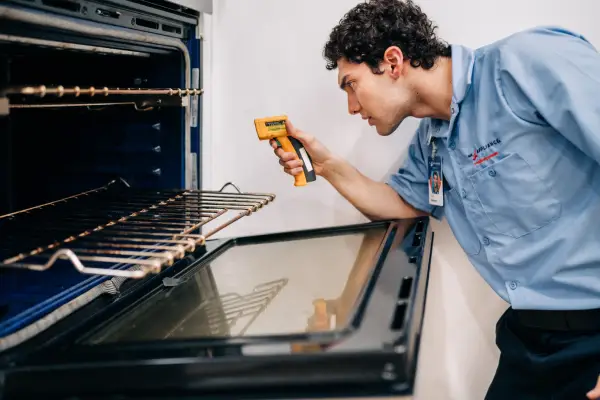
Mr. Appliance® experts offer insights on troubleshooting oven problems safely and effectively.
|
Whether you’re cooking a weeknight dinner or preparing a holiday feast, oven issues can quickly throw off your entire schedule.
From uneven heating to getting stuck in self-clean mode, knowing how to troubleshoot common oven malfunctions safely and effectively can save time and frustration. In this guide, our experts will break down the most likely causes and when to call a service professional for help.
Article contents
- 1. Oven Temperature Is Incorrect
- 2. Oven Won’t Turn On
- 3. Oven Light Doesn’t Work
- 4. Oven Door Won’t Open or Shut
- 5. Oven Won’t Self-Clean
- Preventing Common Oven Issues
- Schedule Oven Service from Mr. Appliance
- FAQs About Common Oven Issues
1. Oven Temperature Is Incorrect
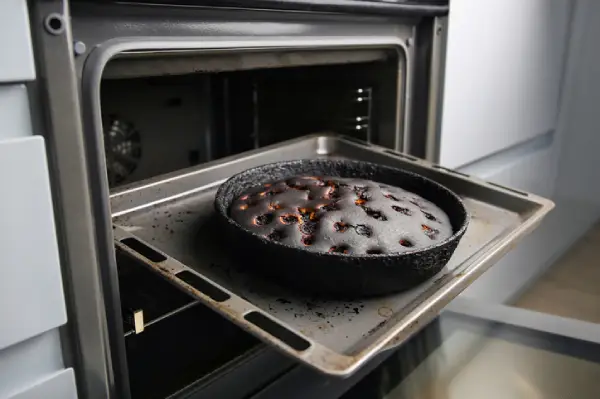
When you preheat the oven, it should maintain the temperature you set it to. If the readout displays a higher temperature than the one you set, or your dinner keeps coming out over- or undercooked, your oven’s internal temperature probably isn’t calibrated correctly.
Start by checking your owner’s manual for instructions on how to recalibrate your oven. Most models allow you to increase or decrease the set temperature by up to 35 degrees.
If recalibration doesn’t work, you might be dealing with a faulty thermostat or temperature sensor. Because these components involve electrical connections, it’s best to have a qualified service professional perform the repair.
2. Oven Won’t Turn On
Few oven issues are as frustrating as pressing “Start” and getting no response. If your oven won’t power on, don’t panic—many of the most common causes are easy to sniff out.
First, confirm the oven is plugged in securely and that the circuit breaker hasn’t tripped. Major appliances like refrigerators, dishwashers, and ovens often run on separate circuits, so other kitchen appliances may still work even if the oven breaker is tripped.
If power isn’t the problem, the issue could be internal. For electric ovens, a broken wire, damaged control board, or faulty heating element could be the cause. For gas oven problems, common culprits include a defective gas valve, igniter, or gas control. Because troubleshooting gas or electrical components carries risk, leave further diagnosis to a trained service professional.
3. Oven Light Doesn’t Work
When your oven light goes out, the fix might be as simple as replacing the bulb. If a new bulb doesn’t solve the problem, it could be a sign of a faulty switch, control board, or wiring issue.
While changing a bulb is generally safe, anything involving wiring or electronic controls should be handled by a professional. Working around live electrical connections is not a safe activity, so get a professional diagnosis.
4. Oven Door Won’t Open or Shut
If your oven door won’t open after a self-cleaning cycle, try this: Unplug the oven or turn off the breaker for five minutes, then restore power and gently move the door lock lever. If that doesn’t work, start another self-clean cycle, wait 15 minutes, then cancel it. Once the oven cools, try to open the door again.
If your oven door won’t stay shut, the hinge or latch may be worn or bent. Replacing these parts typically requires removing the oven door and sometimes the side panel. This is a process best left to an oven repair professional.
5. Oven Won’t Self-Clean
If your oven refuses to start or complete a self-cleaning cycle, there are several potential causes.
Start by checking whether the door locks properly: Self-cleaning cycles won’t begin unless the latch is fully engaged. If that’s not the issue, you could be dealing with a faulty thermostat, control board, or thermal fuse.
Because the self-cleaning process reaches extremely high temperatures, these oven issues should always be handled by a professional. Attempting to fix them yourself can lead to further damage or even injury.
Preventing Common Oven Issues
The best way to avoid oven issues is through routine care and maintenance. Here are a few easy habits that help keep your oven performing reliably year after year:
- Keep the interior clean to prevent buildup that affects temperature accuracy.
- Avoid slamming the oven door to protect hinges and seals.
- Replace light bulbs and damaged gaskets promptly.
- Schedule regular appliance inspections to catch issues early.
Schedule Oven Service from Mr. Appliance
If your oven won’t turn on, heat evenly, or complete a cleaning cycle, don’t wait for the problem to get worse. The service professionals at Mr. Appliance will quickly diagnose and repair both electric and gas oven problems. We’ll have you and your family enjoying home-cooked meals again in no time.
Our team provides reliable troubleshooting and repairs backed by the Neighborly Done Right Promise®—ensuring your oven repair is done right the first time. Request an appointment with your local Mr. Appliance team today and let us keep your kitchen cooking.
This article is intended for general informational purposes only and may not be applicable to every situation. You are responsible for determining the proper course of action for your home and property. Mr. Appliance is not responsible for any damages that occur as a result of this blog content or your actions. For the most accurate guidance, contact the Mr. Appliance location nearest you for a comprehensive, on-site assessment.
FAQs About Common Oven Issues
Integrity, dependability, and exceptional customer service are the qualities that make Mr. Appliance the go-to resource for appliance maintenance and repairs. All independently owned and operated Mr. Appliance locations are committed to providing the top-notch service you expect from an industry leader, including using our expertise and years of experience to answer your questions. Here are answers to some of the most frequently asked questions about how to fix oven problems.